

Investing Mistakes Salaried Employees Make After Salary Hikes (and How to Avoid Them)
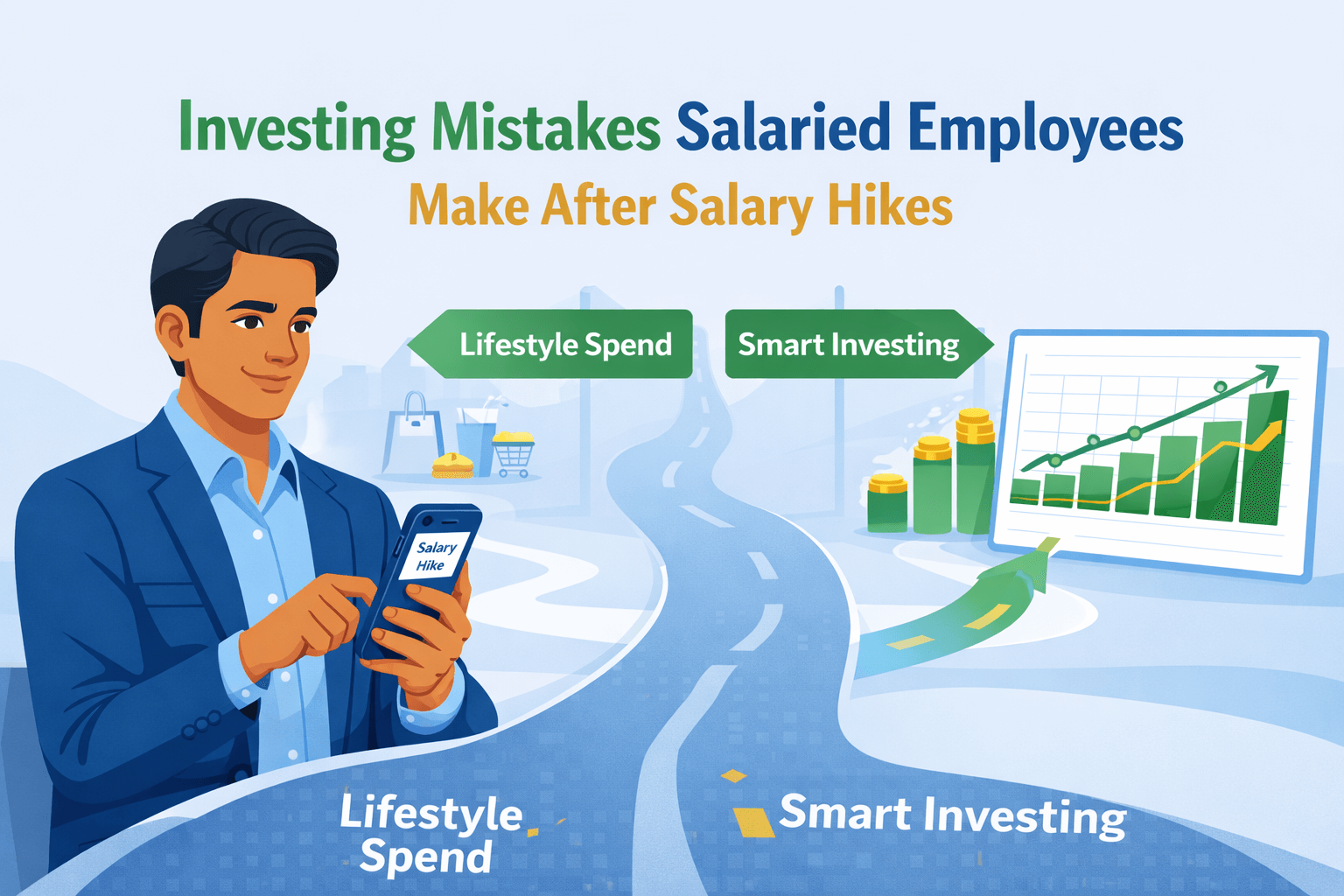
A salary hike is one of the most satisfying milestones in a salaried professional’s life. It validates your hard work, boosts confidence, and often brings a sense of financial relief.
But here’s the uncomfortable reality:
For most salaried employees, salary hikes don’t lead to wealth—they lead to higher expenses.
The problem isn’t earning more.
The problem is what happens next.
Many people unknowingly make poor financial decisions immediately after a hike—decisions that silently delay wealth creation by years. Let’s break down the most common investing mistakes salaried employees make after salary hikes, and more importantly, how to fix them.
Why Salary Hikes Matter More Than You Think
Salary hikes are powerful because they:
-
Increase surplus income
-
Improve investment capacity
-
Create an opportunity to reset financial habits
Yet most people treat hikes as permission to upgrade lifestyle rather than strengthen finances.
Over a 20–25 year career, how you deploy salary hikes matters more than how much you earn initially.
Mistake #1: Spending First, Investing Later
This is the biggest and most common mistake.
As soon as income increases:
-
EMI upgrades happen
-
Dining and travel expenses increase
-
Subscriptions multiply
-
Lifestyle adjusts permanently
What’s left for investing? Very little.
Why this is dangerous
Lifestyle expenses are sticky. Once they go up, they rarely come down—even if income becomes uncertain.
Smarter approach
Before touching your lifestyle:
-
Allocate at least 40–60% of the hike to investments
-
Increase SIPs immediately when the new salary starts
-
Automate investments so spending doesn’t eat into surplus
Rule: Lock investments first. Upgrade lifestyle with what remains.
Mistake #2: Assuming “I’ll Invest More Later”
After a hike, many people delay action thinking:
“I’ll invest once things settle.”
But things rarely settle.
New expenses, responsibilities, and distractions take over—and months pass without meaningful investing.
Why this hurts
Time is the biggest driver of wealth. Delaying investments costs more than choosing an average fund.
Smarter approach
-
Start investing immediately, even with a simple plan
-
You can refine later—but compounding doesn’t wait
-
A basic SIP today beats a perfect strategy tomorrow
Mistake #3: Increasing SIPs Without a Plan
Some people do increase SIPs after a hike—but without clarity.
They:
-
Add random funds
-
Follow “top-performing fund” lists
-
Invest without goal timelines
Why this backfires
When markets fall, money without purpose is the first to be withdrawn.
Smarter approach
Every increase in income should map to a specific goal:
-
Retirement
-
Home down payment
-
Child’s education
-
Financial freedom
Goal-based investing creates discipline and patience.
Mistake #4: Chasing Returns After Gaining Confidence
A salary hike often brings overconfidence.
Suddenly, people start:
-
Switching funds frequently
-
Following social media “hot tips”
-
Moving money based on recent performance
Why this is costly
Frequent switching interrupts compounding and increases the risk of buying high and selling low.
Smarter approach
-
Focus on asset allocation, not fund rankings
-
Review portfolios once or twice a year—not monthly
-
Let compounding do the heavy lifting
Consistency always beats cleverness.
Mistake #5: Ignoring Asset Allocation Completely
After a hike, many salaried employees increase equity exposure aggressively—without considering balance.
They forget:
-
Emergency funds
-
Debt allocation
-
Short-term goals
Why this is risky
If markets fall or income becomes uncertain, investors are forced to redeem equity investments at the worst possible time.
Smarter approach
Maintain a balanced structure:
-
Equity for long-term growth
-
Debt for stability and near-term needs
-
Liquid funds for emergencies
Asset allocation is what protects wealth during tough times.
Mistake #6: Taking Bigger Loans Because Salary Allows It
Banks love salary hikes.
Suddenly, you’re eligible for:
-
Bigger home loans
-
Higher credit limits
-
Longer EMIs
Many mistake eligibility for affordability.
Why this creates stress
Higher EMIs reduce flexibility, increase pressure, and leave little room for investing during downturns.
Smarter approach
-
Keep EMIs below 30–35% of take-home income
-
Use salary hikes to reduce debt faster, not expand it
-
Prioritize investments over lifestyle loans
Mistake #7: Ignoring Insurance After Income Growth
Salary hikes usually come with increased responsibilities:
-
Dependents
-
Loans
-
Higher lifestyle costs
But insurance coverage often remains unchanged.
Why this is dangerous
One medical emergency or income loss can undo years of savings.
Smarter approach
After every major income increase:
-
Review term insurance cover
-
Upgrade health insurance if required
-
Ensure loans are protected
Insurance doesn’t grow money—but it protects everything you’re building.
Mistake #8: Letting Surplus Cash Sit Idle
Post-hike, surplus money often piles up in savings accounts.
It feels safe—but inflation quietly eats into it.
Why this is inefficient
Savings accounts rarely beat inflation. Idle money loses purchasing power.
Smarter approach
-
Keep only operational cash in savings
-
Park short-term surplus in liquid or ultra-short debt funds
-
Gradually deploy money into goal-linked investments
Idle cash is missed opportunity.
Mistake #9: Never Reviewing Investments After Income Changes
Salary increases change your financial reality—but portfolios often remain unchanged for years.
This leads to:
-
Under-investing relative to income
-
Misaligned risk exposure
-
Missed optimization
Smarter approach
Every salary hike should trigger:
-
SIP review
-
Asset allocation review
-
Goal contribution adjustments
Your portfolio should grow as your career grows.
How AI-Powered Investing Helps Salaried Employees
For many salaried professionals, the biggest challenge isn’t money—it’s time, discipline, and clarity.
AI-powered investing helps by:
-
Automatically Adjusting Portfolios as income grows
-
Maintaining Asset Allocation discipline
-
Rebalancing during volatile markets
-
Removing emotional decision-making
Instead of reacting impulsively to salary hikes, AI helps you respond strategically.
A Simple Salary Hike Investment Framework
Use this as a starting rule:
-
50% of hike → Investments
-
30% of hike → Lifestyle upgrades
-
20% of hike → Buffers, insurance, debt reduction
You don’t need perfection—just consistency.
Final Thoughts: Salary Hikes Don’t Create Wealth—Habits Do
A salary hike is not financial success.
What truly matters is:
-
How quickly you invest it
-
How consistently you increase contributions
-
How disciplined your strategy remains
Salaried wealth is built incrementally, not dramatically.
The next time your salary increases, pause before spending.
Ask yourself:
“Will this hike change my lifestyle—or my future?”
Choose wisely.


